At a glance: Most roadside waterfalls are free and accessible year-round. Bring waterproof clothing, as spray reaches further than it appears. Highland waterfalls require 4x4 access and are only reachable in summer.
Iceland has over 10,000 waterfalls. Some sit alongside main roads. Others require hours of hiking through remote terrain. This selection represents the variety Iceland offers, from the accessible to the adventurous.
Top 10 Waterfalls
1. Gullfoss (Golden Falls)
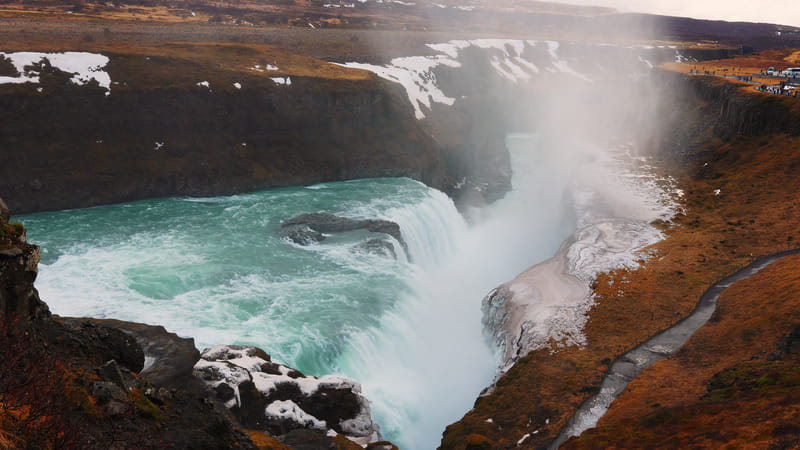
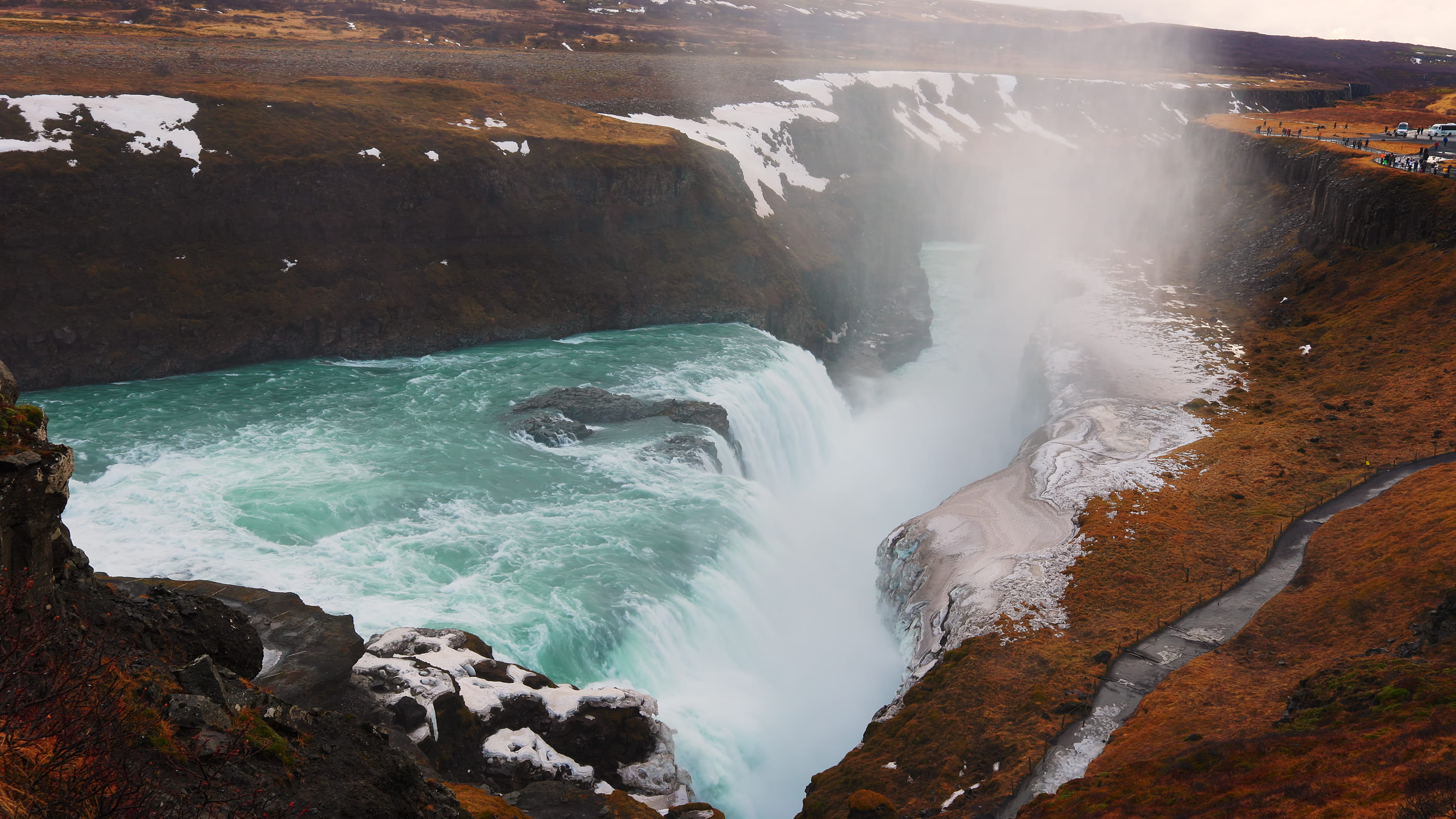
Gullfoss drops 32 meters in two stages into a deep canyon on the Golden Circle. The volume of water, particularly during spring snowmelt, creates considerable mist that can reach the viewing platforms. The name means “Golden Falls,” referring to the color the water takes when sunlight catches the spray. Two platforms offer different perspectives. The upper provides a panoramic view. The lower brings you close enough to feel the spray. In the 1920s, Sigríður Tómasdóttir fought to prevent the falls from being dammed for hydroelectric power. Her story is told at the visitor center.
2. Skógafoss
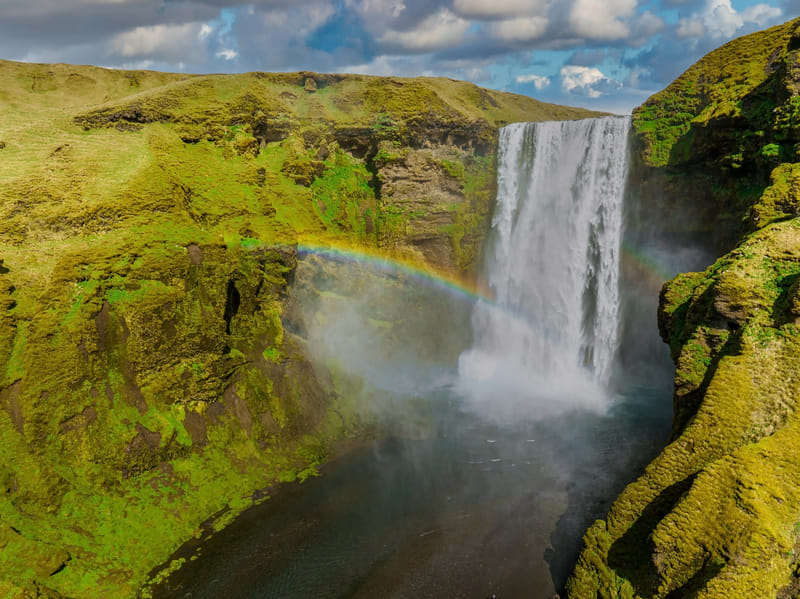
Skógafoss falls 60 meters in a single drop over a cliff visible from the Ring Road. The width of the falls means rainbows often form in the mist on sunny days. A staircase of 527 steps leads to the top, where the Fimmvörðuháls hiking trail begins and more waterfalls continue upstream. The area at the base requires no climbing. The top offers views along the coastline.
3. Seljalandsfoss
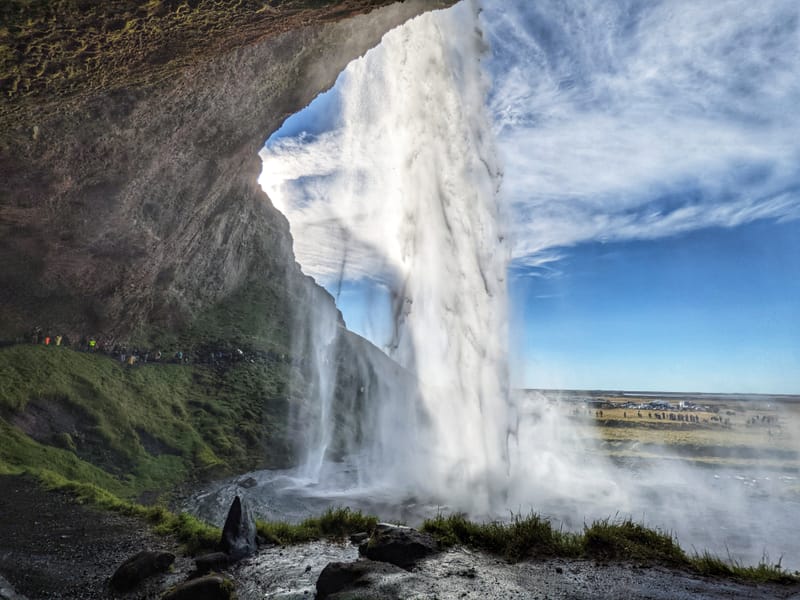
Seljalandsfoss has a cave behind it that allows visitors to walk completely around the 65-meter cascade. The path is wet and slippery, so proper footwear matters. From spring through fall, weather permitting, you can complete the circuit behind the falls. About 500 meters away, Gljúfrabúi hides inside a narrow canyon. Reaching it requires wading through a small stream, but the detour takes just 15 minutes and reveals a waterfall many visitors miss.
4. Dettifoss
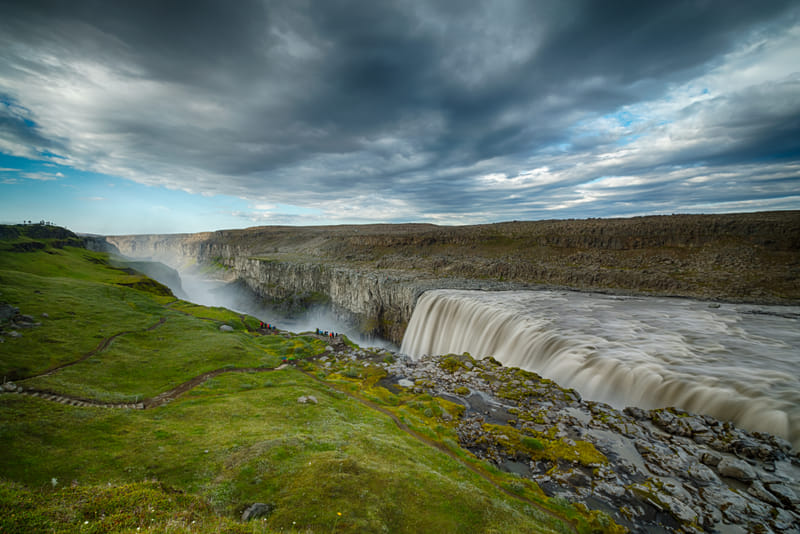
Dettifoss moves more water than any other waterfall in Europe. The spray is visible from considerable distance. The landscape around it is stark, with lava fields and minimal vegetation. Two roads approach the falls. Route 864 on the east is paved with closer viewing platforms. Route 862 on the west is gravel but offers better photography angles. The two sides are not connected. Reaching both requires driving back and approaching again. Plan a full day for this area in Vatnajökull National Park.
5. Goðafoss (Waterfall of the Gods)
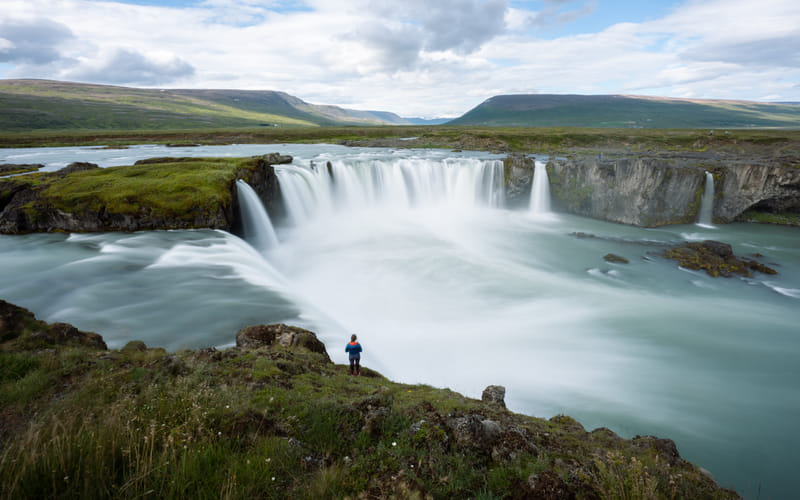
Goðafoss means “Waterfall of the Gods.” According to historical accounts, when Iceland converted to Christianity in 1000 AD, the lawspeaker threw statues of Norse gods into these falls. The horseshoe shape spreads 30 meters wide, creating a different character than Iceland’s taller falls. The site sits close to the Ring Road between Akureyri and Mývatn, making it accessible year-round.
6. Dynjandi
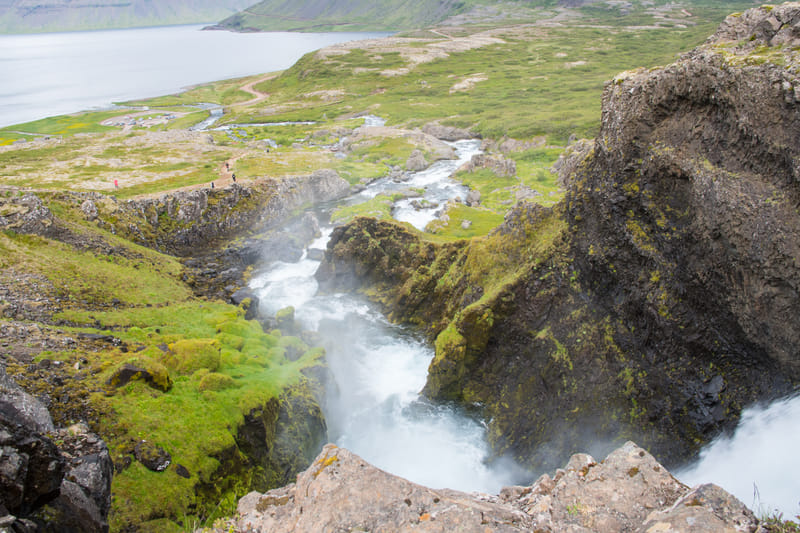
Dynjandi in the Westfjords is actually seven waterfalls, with the main fall spreading in a trapezoidal shape that widens as it descends 100 meters total. The 15-minute walk to the main falls passes smaller cascades along the way. The remote location means fewer visitors. The journey there passes through some of Iceland’s least-visited landscapes.
7. Svartifoss
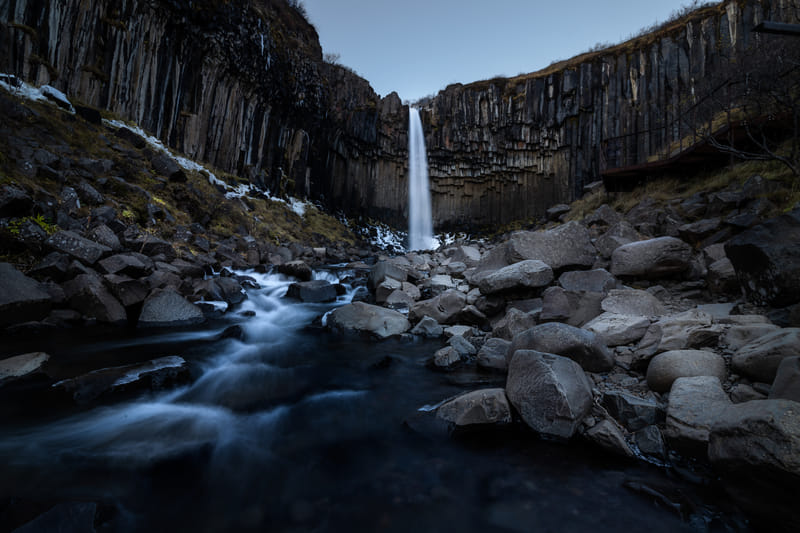
Svartifoss in Skaftafell features hexagonal basalt columns framing a 20-meter drop. The columns formed as lava cooled slowly, creating natural geometric patterns that influenced the design of Reykjavík’s Hallgrímskirkja church. The 45-minute hike from the visitor center passes through birch forest, which is unusual for this part of Iceland.
8. Háifoss
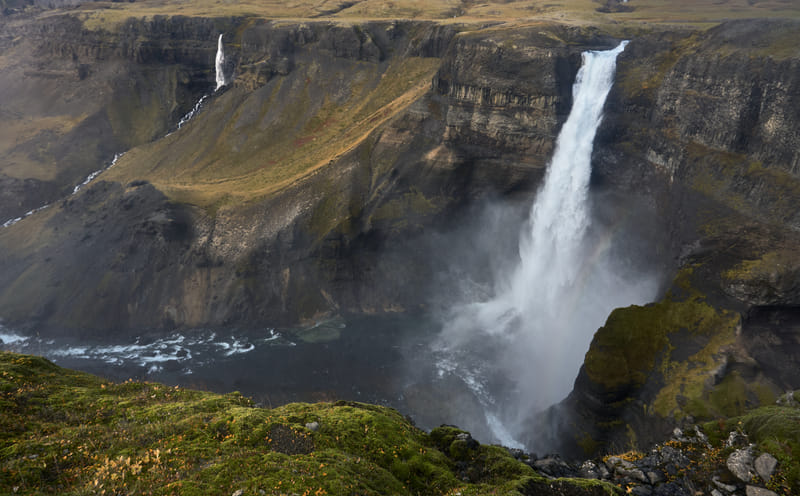
Háifoss, Iceland’s third-tallest waterfall at 122 meters, requires more effort to reach. The gravel road demands a capable vehicle, and summer-only access limits visiting windows. Those who make the journey find a twin waterfall system, Háifoss and its neighbor Granni, dropping into a moss-covered canyon. The difficulty of access means smaller crowds.
9. Hraunfossar
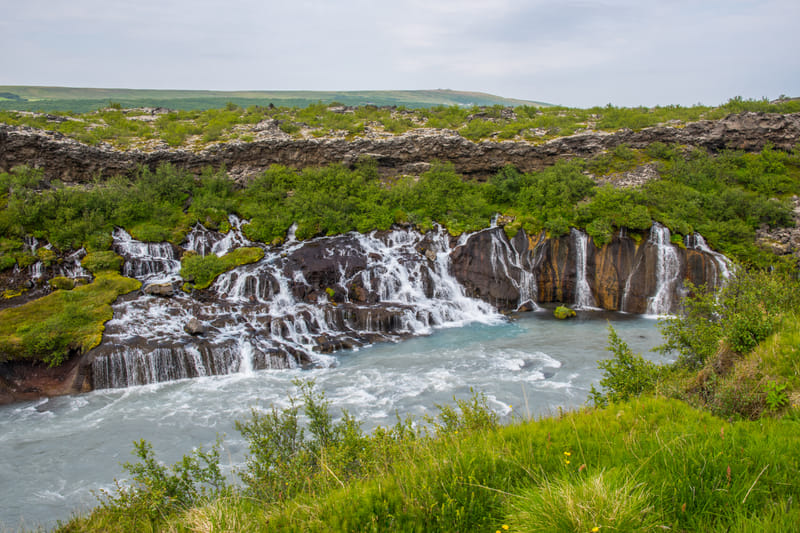
Hraunfossar differs from typical waterfalls. Instead of dropping from a cliff, hundreds of small streams emerge from beneath a lava field, creating a kilometer-long cascade into the Hvítá river. The source is groundwater filtered through porous lava. A short walk upstream, Barnafoss rushes through a narrow rock formation. A legend involving children gives it its name. The two falls are different enough to warrant seeing both.
10. Aldeyjarfoss
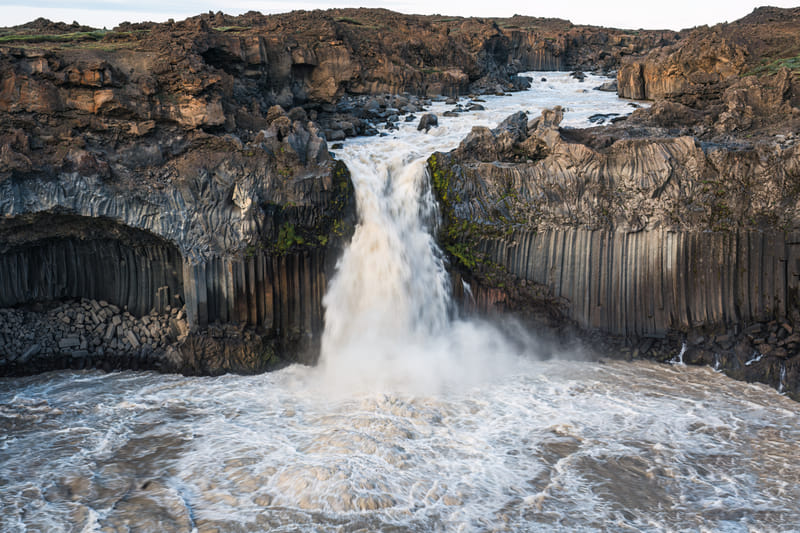
Aldeyjarfoss has basalt columns similar to Svartifoss but on a larger scale. The contrast between white water and dark columns creates stunning visual impact. The highland location requires a 4x4 vehicle via the Sprengisandur route, keeping it off most tourist itineraries. Those who reach it often have it to themselves.
Visit Duration Guide
| Waterfall | Recommended Time | Walking Required | Vehicle |
|---|---|---|---|
| Gullfoss | 30-60 min | 5-15 min from parking | 2WD |
| Skógafoss | 30-90 min | None (base), 20 min (top stairs) | 2WD |
| Seljalandsfoss | 45-75 min | 10-15 min circuit | 2WD |
| Dettifoss | 60-90 min | 15-30 min from parking | 2WD (east), 4WD recommended (west) |
| Goðafoss | 30-45 min | 5-10 min from parking | 2WD |
| Dynjandi | 60-90 min | 15-20 min uphill | 2WD |
| Svartifoss | 90-120 min | 45 min hike each way | 2WD |
| Háifoss | 60-90 min | 5-10 min from parking | 4WD required |
| Hraunfossar | 30-45 min | 5-10 min on paths | 2WD |
| Aldeyjarfoss | 45-60 min | 10-15 min from parking | 4WD required |
Accessibility
Fully accessible (wheelchair/mobility-friendly):
- Gullfoss: Upper viewing platform is accessible via paved path. Lower platform requires stairs.
- Goðafoss: Eastern side has accessible parking and a relatively flat gravel path to viewing area.
- Hraunfossar: Paved and boardwalk paths along the falls are wheelchair accessible.
Partially accessible:
- Skógafoss: The base area is flat and accessible. The 527 stairs to the top are not.
- Seljalandsfoss: Parking area offers views. The path behind the waterfall is steep, wet, and not accessible.
- Dettifoss (east side): Parking is accessible. Path to viewpoint is uneven but manageable with assistance.
- Dynjandi: Parking offers a distant view. The trail to the falls has stairs and steep sections.
Not accessible:
- Svartifoss: Requires a 45-minute hike over varied terrain.
- Háifoss: Rough road and uneven terrain at viewpoint.
- Aldeyjarfoss: Highland road and rocky terrain.
Photography Tips
Rainbow timing:
- Skógafoss: Rainbows appear late morning to afternoon when sun is behind you (facing the falls). Best odds 10 AM - 3 PM on sunny days.
- Seljalandsfoss: Afternoon sun creates rainbows when photographing from the east side.
- Gullfoss: Rainbows common in spray, most visible with afternoon sun.
Best angles:
- Gullfoss: Upper platform for wide shots, lower platform for power and spray. Include canyon for scale.
- Skógafoss: Straight-on shots from base show full height. Top of stairs reveals waterfalls continuing upstream.
- Dettifoss: West side (Route 862) offers better composition with the canyon. East side puts you closer to the falls.
- Dynjandi: Capture the full cascade from the base. Hike up for detail shots of individual tiers.
- Svartifoss: Frame the falls with basalt columns. Morning light avoids harsh shadows in the alcove.
Technical settings:
- Fast shutter (1/500+) freezes water droplets, showing power
- Slow shutter (1/4 to 2 sec) creates silky water effect; requires tripod
- Polarizing filter reduces glare on wet rocks and intensifies colors
- ND filter allows slow exposures in bright conditions
Protecting gear:
- Waterproof housing or rain covers essential at Gullfoss, Skógafoss, and Dettifoss
- Clean lens frequently; spray reaches further than expected
- Keep cameras in sealed bags when not shooting to prevent condensation
Seasonal Notes
Summer provides the longest daylight and access to all waterfalls including those in the highlands. The midnight sun allows photography at unusual hours, though crowds are heaviest. Fall brings autumn colors to surrounding vegetation and fewer visitors. Some highland roads begin closing. Winter transforms some waterfalls with ice formations. Daylight is limited but Northern Lights may appear overhead. Spring snowmelt increases water volume at many falls. Access to some locations remains limited until roads open.
What to wear:
- Waterproof jacket and pants
- Sturdy boots with good grip
- Layered clothing for temperature drops near moving water
Contact us to include these waterfalls in your Iceland itinerary.