At a glance: Aurora season runs September through March. Peak viewing hours are 10 PM to 2 AM. Check vedur.is for forecasts combining aurora activity and cloud cover. Dress warmly. You may be outside for hours.
The Northern Lights occur when charged particles from the sun collide with gases in Earth’s upper atmosphere near the poles. Iceland sits squarely in the auroral zone, which makes it one of the more reliable places to witness this phenomenon. That said, seeing the aurora requires patience, flexibility, and a bit of luck.
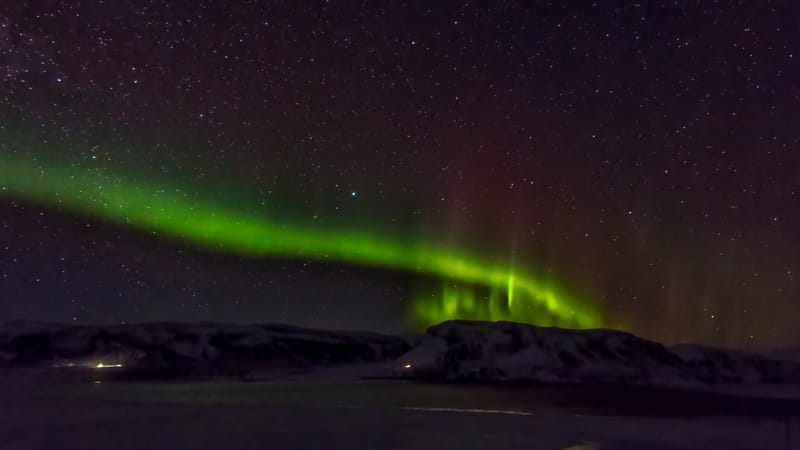
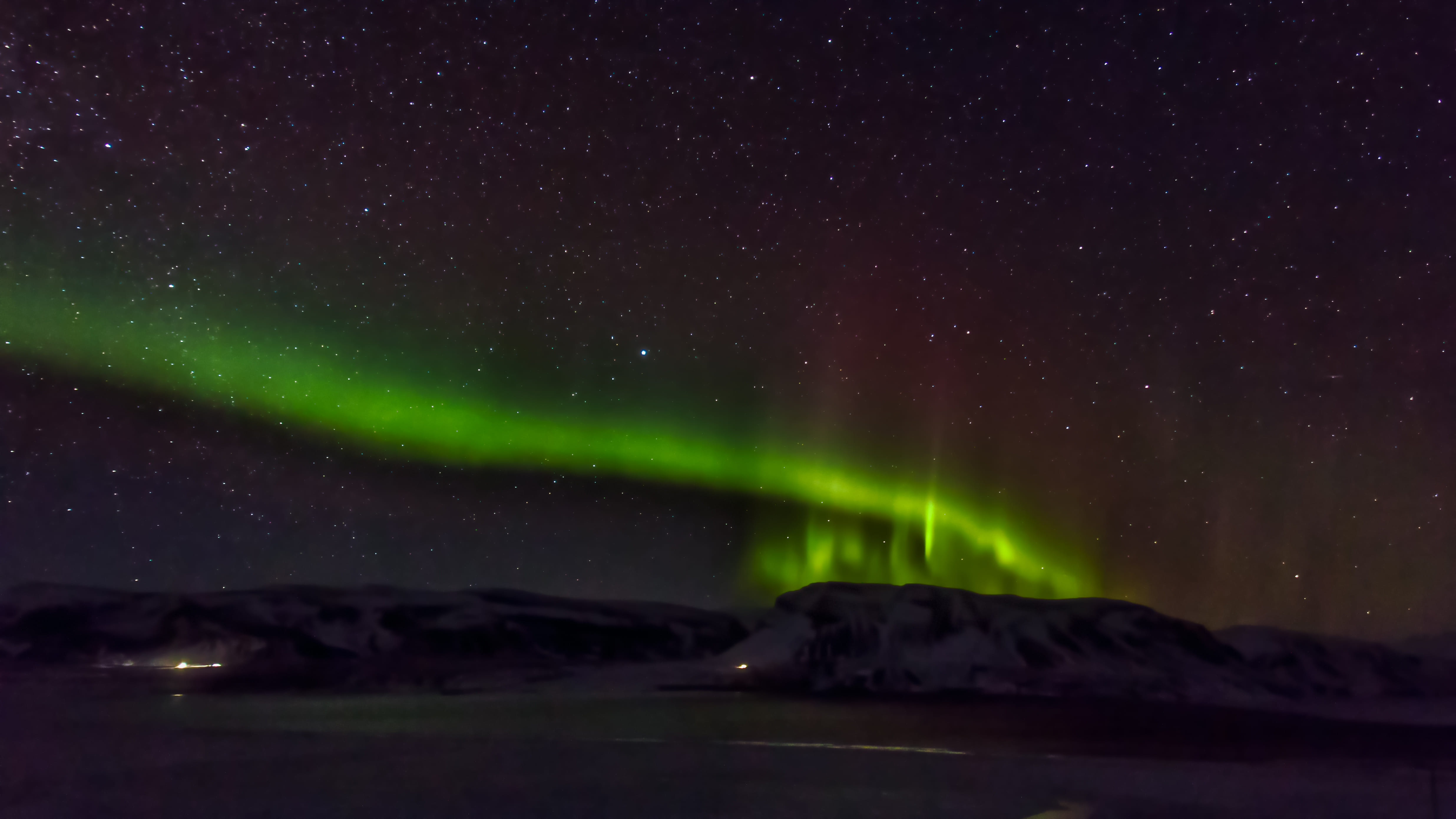
The sun constantly releases streams of charged particles, what scientists call the solar wind. When these particles reach Earth, our planet’s magnetic field funnels them toward the poles, where they strike oxygen and nitrogen atoms. These collisions release energy as visible light. Green, the most common color, comes from oxygen at altitudes between 100 and 300 kilometers. Red and pink appear when oxygen is excited at higher altitudes. Purple and blue result from nitrogen, often appearing at the lower edges of displays.
Scientists measure geomagnetic activity on the Kp index, a scale from 0 to 9. At lower levels, the aurora is faint or invisible. At Kp 2–3, displays become visible from dark locations. Iceland regularly experiences activity in the 2–5 range during aurora season, with occasional stronger events.
The season runs from September through March. The aurora is always occurring, but Iceland’s summer midnight sun makes it invisible. You need darkness to see it. November through January typically offers the best combination of long nights and reasonable weather, though each winter brings different patterns. Activity peaks between 10 PM and 2 AM, although displays can happen any time after dark.
The current solar maximum in 2024–2025 means enhanced aurora activity. The sun follows an 11-year cycle, and higher solar activity translates to more frequent and intense displays.
Finding the aurora requires three things: darkness away from artificial light, clear skies, and an unobstructed view toward the northern horizon. Beyond that, you go where the clouds are not.
South Iceland offers accessible viewing from Reykjavik. Þingvellir National Park sits close enough for evening trips, with dark skies and the rift valley as foreground. Further east, the black beaches near Vík give a different character: stark, dramatic, treeless. Jökulsárlón glacier lagoon, when conditions align, reflects the lights in still water between floating ice. North Iceland experiences longer winter nights. The Mývatn area offers geothermal landscapes as foreground, while Goðafoss waterfall provides good compositions.
Even in Iceland, city lights affect visibility. From Reykjavik, driving 15–20 minutes into the countryside improves views considerably. Smaller towns are often dark enough on their own.
The Icelandic Meteorological Office at vedur.is provides the best aurora forecasts for Iceland. They offer cloud cover predictions alongside aurora activity levels. The key is finding where these overlap. Sometimes this means driving to a different part of the country than you planned. Mobile apps like My Aurora Forecast and Aurora Alerts can notify you when conditions improve.
Photographing the Aurora
Aurora photography requires manual control. Automatic settings will not work in the dark. Recommended settings:
- ISO: 1600–6400 (start around 3200, adjust based on brightness)
- Aperture: as wide as possible (f/2.8 or wider)
- Shutter speed: 10–25 seconds (balance light capture against blur)
- Focus: manually to infinity
- Format: RAW for editing flexibility
Essential gear:
- Sturdy tripod
- Wide-angle lens (14–24mm range)
- Extra batteries (cold drains them rapidly, keep spares warm in your pocket)
- Remote shutter release (prevents camera shake)
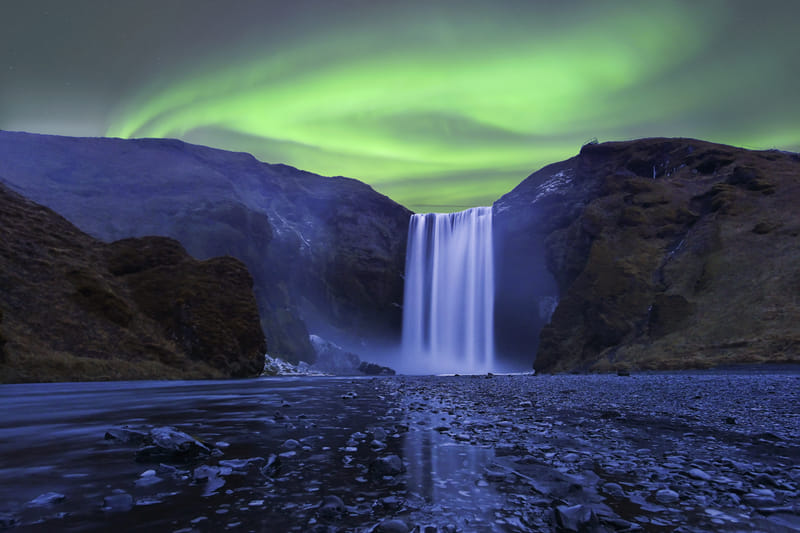
Strong aurora photos include foreground interest: mountains, waterfalls, buildings, or rock formations. Reflections in lakes add impact. Consider multiple exposures to blend later. Smartphones can capture the aurora using night mode, but results are modest compared to dedicated cameras.
Composition tips:
- Include foreground: Mountains, churches, waterfalls, or interesting rock formations give context and scale
- Reflections: Still water at Jökulsárlón, Kirkjufell, or Mývatn doubles the aurora’s visual impact
- Rule of thirds: Place the horizon low to emphasize aurora, or high to feature reflections
- Leading lines: Use roads, fences, or shorelines to draw the eye toward the aurora
- Silhouettes: Trees, mountains, or people in silhouette add depth
Advanced techniques:
- Star tracking: Blend tracked star shots with static foreground for sharp stars and aurora
- Time-lapse: Capture the aurora’s movement over minutes or hours
- Panoramas: Wide displays often require multiple frames stitched together
- Focus stacking: Combine focused foreground with infinity-focused sky
Accessible Aurora Viewing
Most aurora viewing requires driving to dark locations, but accessible options exist:
From vehicle/roadside:
- Park at any pullout away from city lights
- View from inside a warm vehicle or from accessible parking areas
- Þingvellir parking lots offer dark skies and paved surfaces
- Jökulsárlón lagoon parking is paved and offers spectacular aurora over icebergs
Accessible tour options:
- Many tour buses accommodate wheelchairs with advance notice
- Private tours can be customized for accessibility needs
- Hotel aurora wake-up calls let you view from accessible hotel grounds
Best accessible locations:
- Þingvellir: Paved parking with dark skies 40 minutes from Reykjavík
- Grotta Lighthouse: Flat, paved area at Reykjavík’s edge
- Jökulsárlón: Paved parking with icebergs as foreground
- Kirkjufell: Roadside viewing of Iceland’s most photographed mountain
Tours or Independent Hunting
Guided tours offer certain advantages. Expert guides know weather patterns and can chase clear skies across the country. Transportation is warm. Most operators offer multiple attempts if the first night fails. Tours range from budget bus excursions to minibus tours with smaller groups to luxury super jeep trips reaching remote locations. Costs typically run ISK 10,000–25,000.
Hunting aurora independently offers flexibility: going wherever conditions are best, staying as long as you want, following your own rhythm. Many visitors find independent hunts more satisfying. Self-guided hunting requires a rental car, the ability to read forecasts, warm clothing for hours outdoors, and patience.
First-time aurora hunters often benefit from a guided tour to learn from experienced guides. Those who’ve seen the lights before typically prefer self-guiding for maximum flexibility.
Aurora hunting means standing outside in cold darkness, possibly for hours. Dress warmer than you expect:
- Insulated jacket
- Warm mid-layers
- Thermal underwear
- Hat covering your ears
- Insulated gloves
- Warm boots
- Hand and toe warmers for backup
Auroras vary in intensity. Faint displays appear as a gray-green band, barely visible and easily mistaken for clouds. Moderate displays show clear green bands with visible movement. Strong displays bring bright colors with dancing curtains. On rare occasions, the aurora fills the sky with multiple colors and rapid movement. Your eyes see less colour than cameras capture. In moderate displays, what appears whitish to your eyes may reveal vivid green on camera. This doesn’t diminish the magical experience.
Clear skies present the biggest challenge. Iceland’s weather is unpredictable, and clouds can obscure strong aurora. Not every night produces displays, even during peak season. Patience is required. Flexibility is essential. With good forecasts, a flexible schedule, and several nights of opportunity, most visitors during peak season see some aurora activity.
Aurora hunting pairs naturally with other experiences. Visit Jökulsárlón at sunset and stay for aurora over the icebergs. Soak in a hot spring and watch the sky from warm water. Photograph Kirkjufell by day and wait for aurora at night. The best trips allow enough time and flexibility to chase the lights when conditions align.
Contact us for guidance on planning your aurora trip.