At a glance: Iceland has around 30 active volcanic systems with eruptions every 3 to 5 years on average. Check vedur.is daily for current volcanic activity and safety information. Geothermal areas require staying on marked paths. Thin ground can collapse into scalding water.
Iceland sits atop one of Earth’s most geologically dramatic locations: the Mid-Atlantic Ridge, where the North American and Eurasian tectonic plates slowly pull apart. Add to this a mantle plume (a hot spot of magma rising from deep within the Earth) and you have the conditions for exceptional volcanic activity. Eruptions occur roughly every few years, sometimes more frequently, shaping landscapes that range from black lava fields to colorful rhyolite mountains.
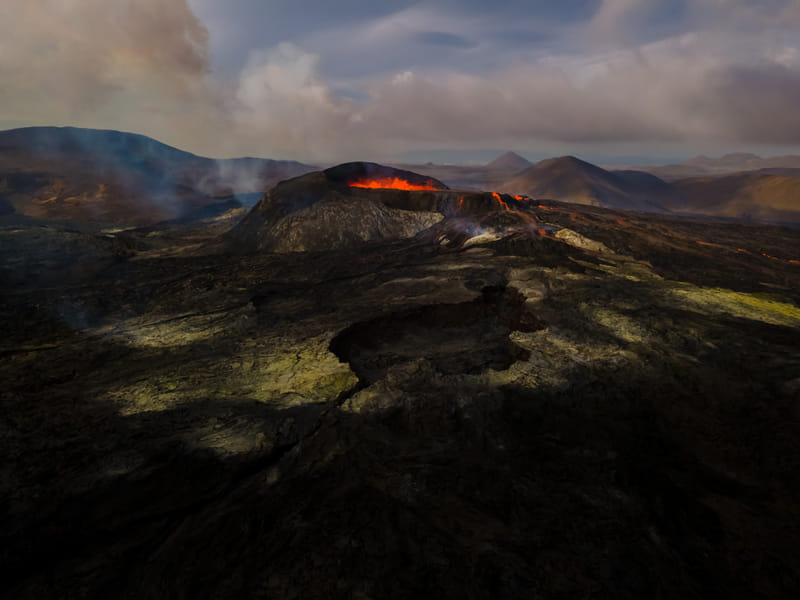
The forms these eruptions take vary considerably. Fissure eruptions, like those on the Reykjanes Peninsula in recent years, are long cracks in the earth that produce flowing rivers of lava. They are visible but often less explosive. Explosive eruptions occur when magma meets ice beneath glaciers, creating powerful blasts and massive ash clouds. The 2010 Eyjafjallajökull eruption demonstrated just how disruptive these events can be. Effusive eruptions involve lava flowing steadily from central volcanoes without major explosions, gradually building up shield volcanoes over time.
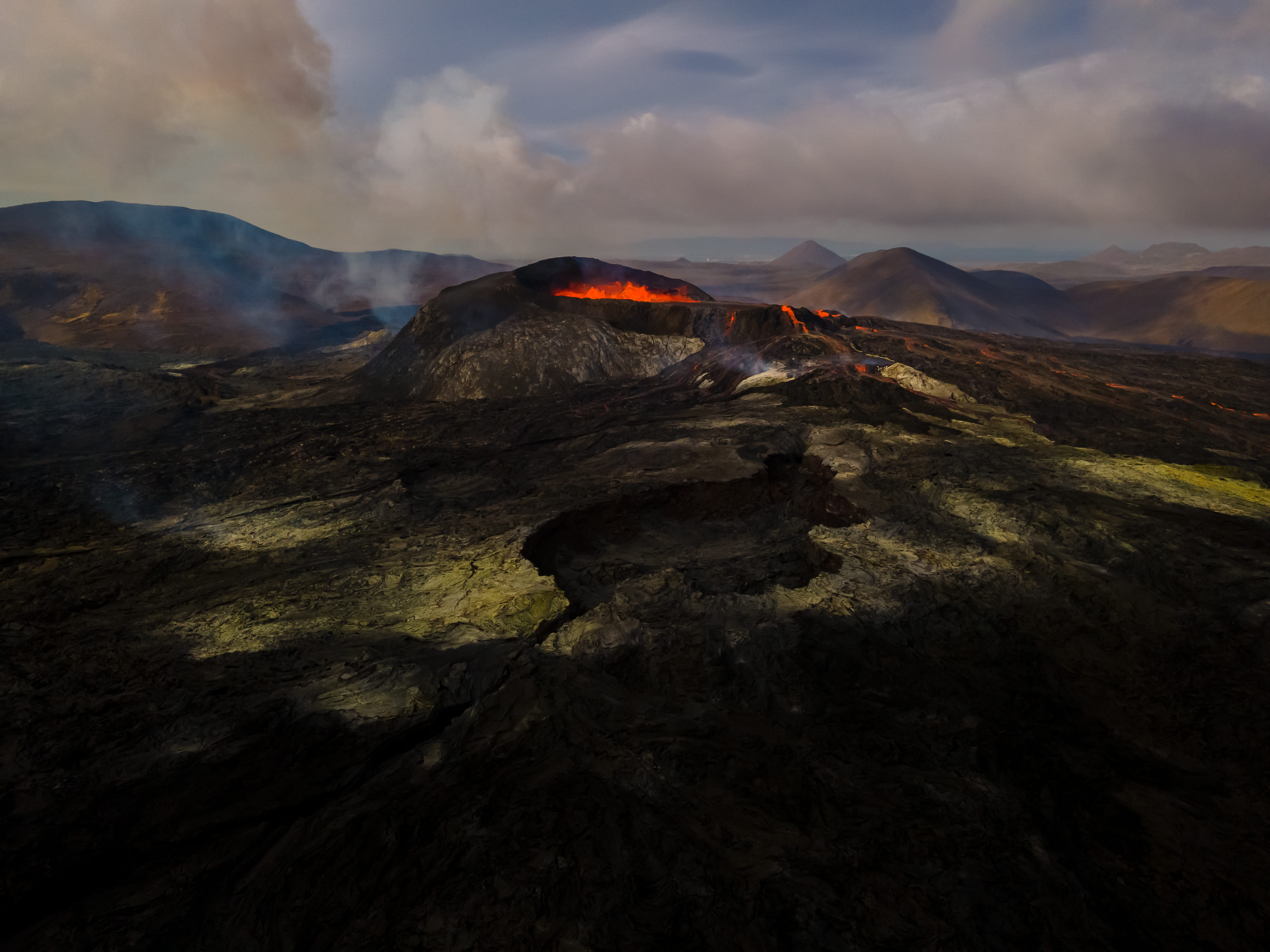
The Reykjanes Peninsula had been dormant for 800 years before reawakening in 2021. The Fagradalsfjall eruption created a new lava field that became accessible by hiking, drawing thousands of visitors who watched from designated viewing areas. The experience of standing near flowing lava under the midnight sun remains one of Iceland’s most unforgettable natural encounters. Continuing activity through 2024 has brought multiple eruptions in the area, affecting the coastal town of Grindavík and leading to evacuations. The situation continues to evolve.
Eyjafjallajökull, the stratovolcano whose 2010 ash cloud disrupted European air travel for weeks, sits beneath a glacier cap in South Iceland. Today you can visit the area and learn about the eruption’s impact on local farms at the Þorvaldseyri visitor center. The pronunciation challenge (roughly “AY-ya-fyat-la-YO-kutl”) has become something of an Icelandic in-joke with visitors.
Katla, Iceland’s most powerful volcano, lies beneath Mýrdalsjökull glacier and hasn’t had a major eruption since 1918. Scientists consider it overdue. An eruption would trigger massive glacial floods called jökulhlaup. Despite this, the area remains safe to visit, and ice cave tours from Vík explore the glacier’s interior. The Katla ice cave features striking black ash layers from past eruptions.
Hekla, visible from much of South Iceland, earned a fearsome medieval reputation as the gateway to hell. Its frequent eruptions with little warning supported this belief. The volcano last erupted in 2000 and can be climbed when not showing signs of activity, though you should always check current conditions. Grímsvötn, hidden beneath Vatnajökull glacier, holds the record as Iceland’s most frequently erupting volcano with over 60 eruptions since settlement. Snæfellsjökull on the Snæfellsnes Peninsula inspired Jules Verne’s “Journey to the Center of the Earth” and remains one of Iceland’s most photographed mountains, visible from Reykjavik across the bay on clear days.
Reaching Askja requires commitment: a 4x4 vehicle, a full day’s journey on F-roads, and confirmation that the highland route is open. The reward is a spectacular caldera containing the deep Öskjuvatn lake and the warm Víti crater, which is swimmable when accessible. The remote location makes this feel like visiting another planet.
Volcanic Landscapes
The Reykjanes UNESCO Global Geopark, easily accessible from Reykjavik and the international airport, offers a concentrated introduction to geothermal Iceland. The Gunnuhver hot springs showcase bubbling mud and powerful steam vents. The “Bridge Between Continents” lets you symbolically walk between tectonic plates. The Krýsuvík area presents colorful mineral deposits and steaming vents, and the Blue Lagoon provides a bathing experience amid the lava fields.
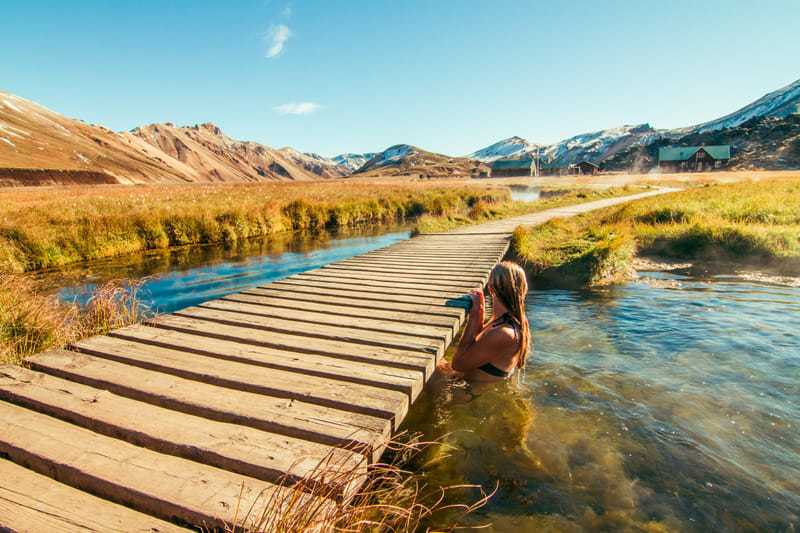
Landmannalaugar’s rhyolite mountains are painted in volcanic mineral colors: orange, red, yellow, green, and purple peaks unlike anywhere else on Earth. Natural hot springs offer bathing after hiking, and the Laugavegur trail begins here. Highland access requires a 4x4 and roads open only in summer.
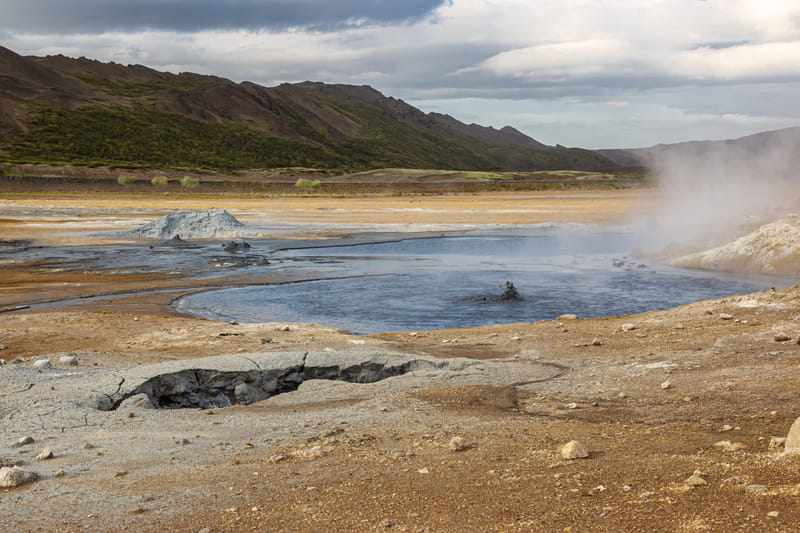
The Mývatn area in North Iceland offers accessible geothermal experiences year-round. Námaskarð features boiling mud pools and sulfur vents against a Mars-like backdrop. Dimmuborgir’s lava formations create a labyrinth of towers and caves. You can walk around the rim of Hverfjall crater, explore the Krafla volcanic area, or relax in the Mývatn Nature Baths.
The Westman Islands formed from underwater eruptions and hold dramatic volcanic history. In 1973, Eldfell erupted without warning, burying part of Heimaey town. You can walk on that lava field today, feeling warmth still radiating from below in places. The Eldheimar volcano museum tells the story of that night when residents evacuated by fishing boats. Offshore, Surtsey island formed during eruptions from 1963 to 1967 and is now a UNESCO World Heritage site. Landing is not permitted to protect ongoing scientific research.
Staying Safe
The Icelandic Meteorological Office at vedur.is provides essential information: current volcanic activity levels, gas pollution measurements, area closures, and weather affecting volcanic areas. Check this resource daily during your trip, especially when visiting active areas.
Iceland’s monitoring system watches all active volcanoes continuously. Warnings are issued when:
- Seismic activity increases
- Ground deformation is detected
- Gas emissions change
- Eruption begins
The system works. Iceland has an excellent safety record despite high volcanic activity. If an eruption occurs during your visit, follow official instructions immediately and stay away from evacuation zones.
Geothermal areas require particular caution:
- Always stay on marked paths (thin crust can collapse into scalding water)
- Water and mud at these sites can reach boiling temperatures
- Toxic gases can accumulate in low-lying areas, especially on calm days
The same volcanic forces that created Iceland now power it. About 90% of Icelandic homes are heated by geothermal water piped directly from underground. Swimming pools throughout the country use natural hot water. Greenhouses grow tomatoes, cucumbers, and peppers year-round despite the latitude. Geothermal plants generate around 25% of Iceland’s electricity, and combined with hydropower, the country produces nearly 100% of its electricity from renewable sources. You can tour the Hellisheiði Power Station near Reykjavik to see how this works, or simply enjoy the steam vents visible throughout the countryside as a reminder of the power beneath your feet.
Iceland’s volcanoes are central to the country’s identity. They shape the landscapes, power the homes, and remind everyone that this is a land still being formed by Earth’s internal forces.
Contact us to safely experience the fire beneath the ice.