At a glance: Puffin season runs mid-April to mid-August, peaking in June and July. Whale watching operates year-round from Reykjavik, with the highest success rates in Húsavík during summer. Arctic foxes are most visible in the Westfjords, particularly Hornstrandir Nature Reserve.
Despite its name and northern location, Iceland teems with wildlife. Millions of seabirds arrive each summer to nest on coastal cliffs. Whales feed in nutrient-rich waters just offshore. The Arctic fox, Iceland’s only native land mammal, has thrived here since the Ice Age. And the Icelandic horse, isolated for a thousand years, has become a breed unlike any other.
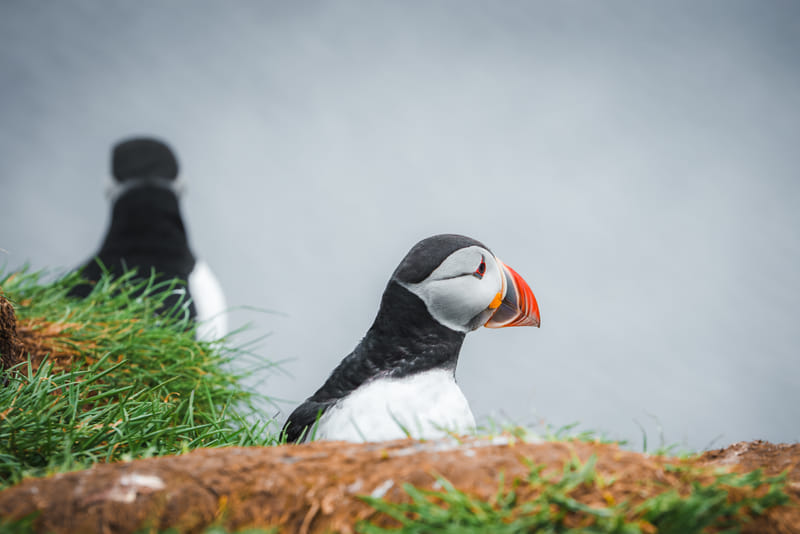
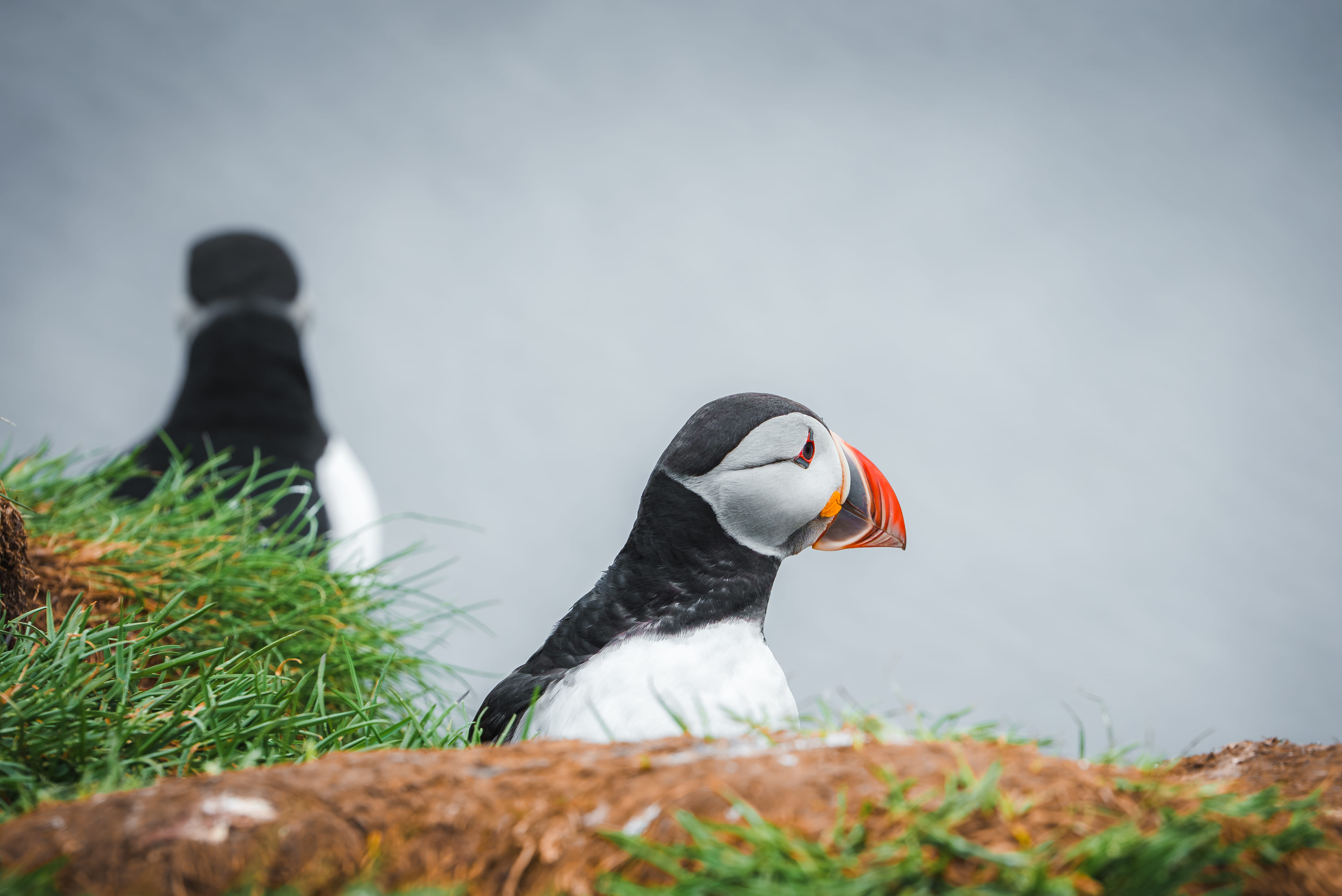
The Atlantic Puffin is Iceland’s unofficial mascot. Roughly 60% of the world’s Atlantic Puffin population breeds here, somewhere between 8 and 10 million birds. They spend most of the year at sea, returning to Icelandic cliffs from mid-April to mid-August to nest and raise their young. June and July offer the best viewing, particularly early morning and evening when the birds return from fishing with beaks full of sand eels.
The cliffs at Látrabjarg in the Westfjords hold Europe’s largest seabird colony. Puffins here have grown remarkably tolerant of humans, allowing close photography. Borgarfjörður Eystri in East Iceland offers viewing platforms overlooking the colony with fewer crowds. The Westman Islands host one of the world’s largest puffin colonies, accessible by boat tours and island walks. Dyrhólaey near Vík on the South Coast provides accessible viewing from the Ring Road, though closures sometimes occur during peak nesting. From Reykjavik, boat tours visit Lundey and Akurey islands where puffins nest just offshore.
When watching puffins:
- Maintain reasonable distance
- Never touch them (they’re tolerant but stressed by handling)
- Don’t use flash photography
- Stay on marked paths to avoid crushing burrows
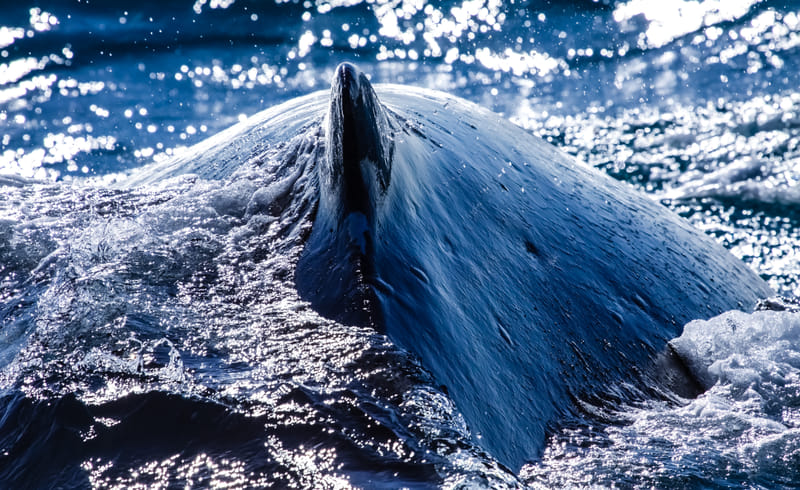
Iceland’s waters support a stunning variety of whales. Minke whales are the most commonly sighted. These curious animals sometimes approach boats. Humpbacks appear increasingly often, their spectacular breaching and tail slapping making them a favorite on tours. Blue whales, the largest animals on Earth, are rarely seen but unforgettable when they appear, mostly around Húsavík in summer. Orcas are more common in winter, particularly around the Snæfellsnes Peninsula. White-beaked dolphins are playful and common, often riding bow waves year-round.
Húsavík in North Iceland has earned the title “Whale Watching Capital of Europe” for good reason. It offers the highest success rates, especially for humpbacks. Reykjavik provides convenient departures from the old harbor with good results for minke whales and dolphins. Akureyri’s growing whale watching scene sees similar species to Húsavík. Snæfellsnes draws visitors hoping to spot orcas, particularly during winter months.
Whale watching tips:
- Dress warmly (it is cold on the water even in summer)
- Take seasickness medication beforehand if prone
- Morning tours often have calmer seas
- Carbon-neutral tours are available for environmentally conscious travelers
The Arctic Fox is Iceland’s only indigenous land mammal, having arrived on sea ice during the Ice Age. Roughly 8,000 remain in Iceland, protected in some areas since 1994. Two colour forms exist: white foxes that turn white in winter, and blue foxes that stay dark year-round.
Hornstrandir Nature Reserve in the Westfjords offers the best chances of seeing foxes. Protected status has removed their fear of humans, and multi-day hikes through the reserve often yield sightings. Throughout the Westfjords, foxes are more common than elsewhere. Look for them at dawn and dusk, often near bird cliffs where they hunt eggs and chicks. The Arctic Fox Centre in Súðavík offers guaranteed sightings of rescued foxes along with education about the species.
Two seal species live year-round in Icelandic waters. Harbor seals are more common, found throughout the country resting on beaches and rocks, sometimes watching you as curiously as you watch them. Grey seals are larger and less commonly seen, found mainly in the west. The Vatnsnes Peninsula in the northwest offers dedicated seal watching tours and observation points. Jökulsárlón glacier lagoon provides unique viewing as seals rest on floating icebergs. Ytri Tunga beach on the Snæfellsnes Peninsula offers an easy walk to see seals hauled out on the shore.
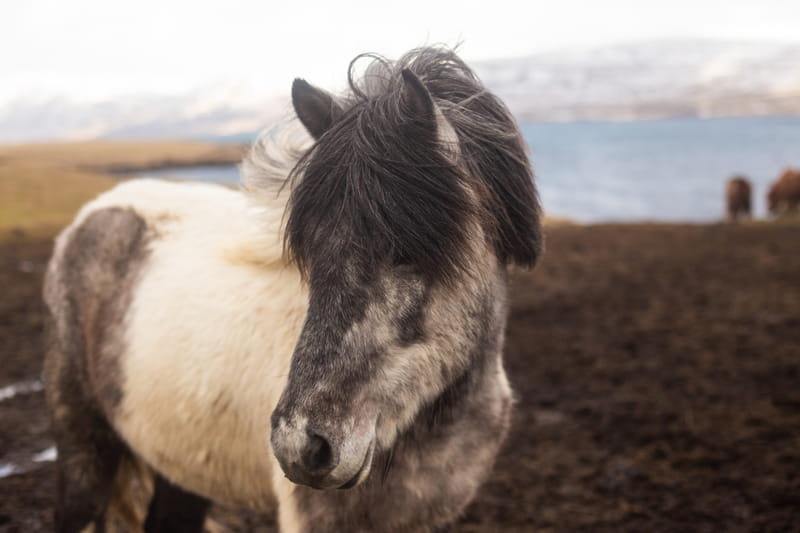
The Icelandic horse isn’t wildlife, but it’s uniquely Icelandic. These small, sturdy horses have been isolated for a thousand years, creating a genetically distinct breed. They possess five gaits rather than the typical three or four. The tölt is a smooth, fast walk that makes riding remarkably comfortable. Hardy and intelligent, they thrive in conditions that would challenge other breeds.
Riding tours operate throughout Iceland. Farms welcome visitors. Photographing horses along roadsides is fine, though you shouldn’t feed them. One strict rule protects the breed: once an Icelandic horse leaves the country, it can never return, preventing the introduction of foreign diseases.
Reindeer were introduced from Norway in the 18th century and now live wild in East Iceland. The population of roughly 7,000 animals is often visible from the Ring Road in the east, with best chances from July through September in the highlands and winter at lower elevations.
Beyond puffins, Iceland’s seabird populations include Arctic terns (making the longest migration of any animal, from Antarctica to Iceland and back) that aggressively defend their nests by dive-bombing passersby. Northern gannets, striking white birds with spectacular diving abilities, nest at Látrabjarg and on Eldey island off the Reykjanes Peninsula. Great skuas, large and powerful, will attack to protect their nests. Guillemots and razorbills share cliff space with puffins throughout the summer.
Photography Tips
Recommended gear:
- Telephoto lens: 100-400mm or 150-600mm for puffins and distant whales
- Wide-angle: 24-70mm for environmental shots and landscapes with wildlife
- Fast shutter: 1/1000+ for flying birds, 1/500 for whales surfacing
- High ISO capability: Low light during early morning/evening when wildlife is most active
Puffin photography:
- Best time: Early morning (5-8 AM) and evening (7-10 PM) when birds return from fishing
- Látrabjarg advantage: Puffins are unusually tolerant, allowing shots with 70-200mm lens
- Capture feeding: Beaks full of sand eels make iconic images
- Flight shots: Position with ocean behind for clean backgrounds
Whale photography:
- Continuous shooting: Whales surface briefly; burst mode captures the moment
- Anticipate: Watch for blow spouts to predict where whale will surface
- Include splash: Tail slaps and breaches create dynamic images
- Patience: Most whale watching trips last 3 hours; best shots often come late
General tips:
- Patience matters more than equipment
- Never use flash on wildlife
- Stay on marked paths to avoid disturbing burrows and nests
- Keep ethical distance (minimum 5 meters from puffins, don’t approach seals)
- Avoid sudden movements that may startle animals
Accessible Wildlife Viewing
Whale watching:
- Most whale watching boats from Reykjavík and Húsavík can accommodate wheelchairs with advance notice
- Larger boats offer more stability and accessible facilities
- Elding and Special Tours in Reykjavík specifically cater to accessibility needs
Puffin viewing:
- Borgarfjörður Eystri: Viewing platforms with boardwalks overlooking the colony
- Reykjavík boat tours: Accessible boats visit puffin islands June-August
- Dyrhólaey: Parking area offers distant viewing; cliff path not accessible
Seal watching:
- Ytri Tunga (Snæfellsnes): Short, relatively flat walk to seal viewing beach
- Jökulsárlón: Seals visible from paved parking area
Icelandic horses:
- Many stables offer accessible interactions and demonstrations
- Horses often visible from roadside throughout Iceland
Arctic Fox Centre (Súðavík):
- Museum is accessible
- Rescued foxes viewable without hiking
Contact us to plan your wildlife adventure with the best timing and locations for your favorite species.